Beach Bliss: Merge Puzzle
- 4.3
- Rating
- 50.00K
- Installs
- Free
- Price

 Analysis by App-foxy
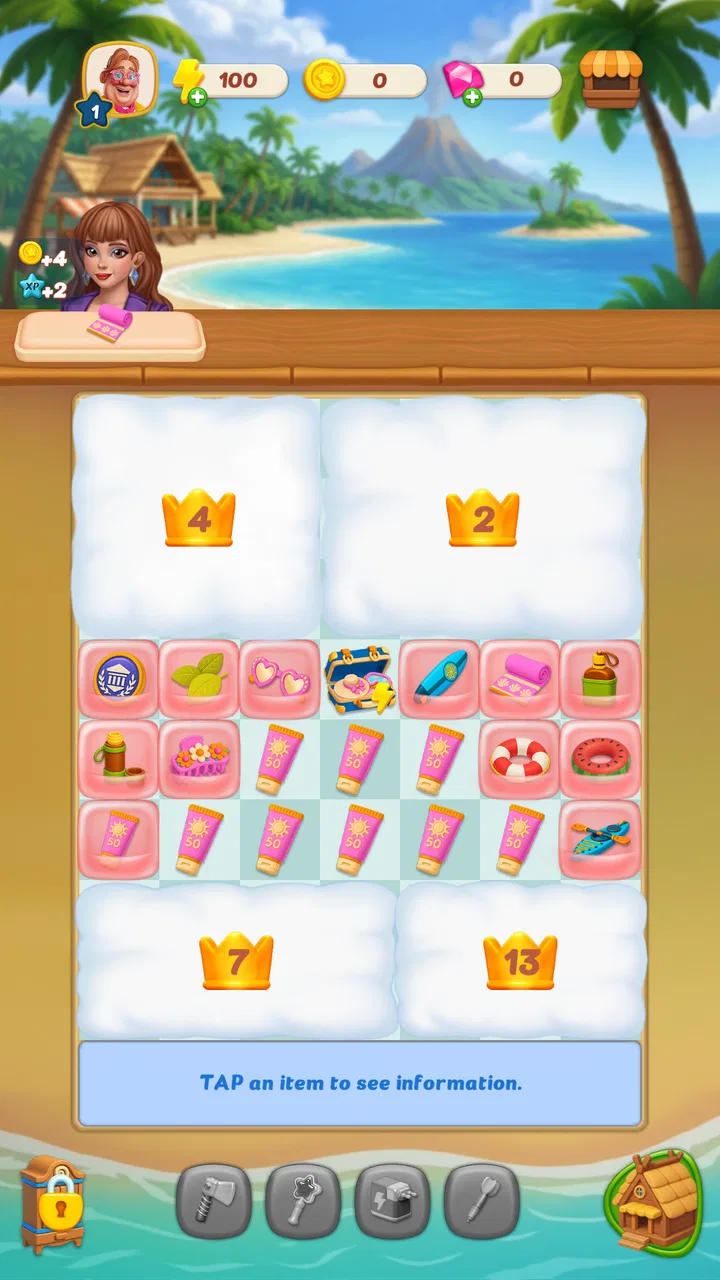
Beach Bliss: Merge Puzzle is the kind of relaxing puzzle game I can pick up without preparing myself for a serious session. Its appeal is immediate: combine matching pieces, watch the board develop, and use the rewards to improve a beach setting. The presentation aims for a calm makeover experience rather than a demanding brain workout, which makes it easy to understand within a few minutes.
I reviewed it as a free game from Kite Games AS, and my overall impression is pleasantly mixed. The first sessions are inviting because the merge actions feel tidy and rewarding, while the beach theme gives the progress a visible purpose. The harder question is whether that loop remains interesting once the initial discoveries are gone. For me, the answer depends heavily on what I want from a puzzle game: it works well as a light daily diversion, but it is less convincing if I expect deep strategy or a large amount of meaningful variety.
What Beach Bliss feels like after the first week
The opening appeal comes from the combination of two familiar ideas: matching objects and improving a destination. Instead of solving isolated puzzles and moving on, I have a sense that each small action contributes to a broader beach makeover. That relationship between the board and the scenery is important. A merge feels more satisfying when it is tied to visible progress, even if the individual move is simple.
You May Also Like

 Pandora - Music & Podcasts
Pandora’s Music Is Easy to Start, but Harder to Recover
Pandora’s strength is its low-effort path from a seed to a station. Its weak spot is how much confidence it asks you to place in connection, setup, and quiet recovery.

 8 Ball Pool
 Is Built on Rivalries, Rematches, and Routine
A close look at the rivalries, rematches, shared routines, and unanswered safety questions that turn a quick pool match into a persistent mobile community.

 Samsung Music
’s Quiet Strength Is Playing What You Already Own
Its reach comes less from spectacle than from dependable access to a personal library. That simplicity is both the app’s strongest retention engine and its ceiling.

 AccuWeather: Weather Radar
AccuWeather Review: A Quick, Clear Forecast for Everyday Decisions
For everyday plans, the best forecast is the one you can understand quickly. AccuWeather makes rain timing, radar, and local conditions easy to act on, with a few trade-offs.

 Hill Climb Racing
Why Hill Climb Racing Still Turns Crashes Into One More Run
A tiny car, a bumpy hill and one more upgrade: Hill Climb Racing keeps resurfacing because its simple chaos makes every near-miss feel personal.

 AliExpress - Shopping App
AliExpress Makes Global Shopping Feel Personal, but Shoppers Bear the Risk
AliExpress turns a global marketplace into a pocket-sized discovery engine. Its reach is useful, its shopping loop compelling, and its trade-offs easy to miss.
More From Our News Desk
View All News


The controls and rules are approachable enough for casual players. I do not need to learn a complicated system before enjoying the first few rounds, and the game’s Everyone age rating reflects that accessible tone. It is suitable for someone who wants a gentle puzzle activity rather than pressure, competition, or a story that demands close attention.
During an ordinary first week, I would use it in short gaps: while waiting for an appointment, during a commute as a passenger, or for a few minutes before bed. The beach setting supports that habit because it creates a softer mood than many puzzle games built around urgency, countdowns, or aggressive sound effects. I would not describe it as completely passive, though. The board still asks me to notice available combinations and decide which pieces to merge first.
One useful early habit is to avoid merging the first obvious pair automatically. I get more from the board when I pause briefly and check whether a different combination could open space or preserve a useful piece. That small delay matters because merge games often become less comfortable when the play area fills with objects that are individually valuable but awkwardly placed.
The makeover layer also gives new players a reason to continue after a single successful combination. A pure merge board can feel repetitive if every move produces only another item. Here, the beach environment makes the result feel more concrete. I am not just clearing space; I am working toward a more attractive location. That is a good design choice for people who enjoy gradual visual improvement and low-stress progress.
Still, the first-week experience should be judged fairly. The game is relaxing, but relaxation is not the same as depth. Players who prefer logic puzzles with one correct solution, carefully engineered levels, or increasingly demanding tactical challenges may find the early loop too forgiving. Beach Bliss is closer to a soothing progression game with puzzle elements than to a traditional puzzle title that tests advanced reasoning.
The store rating sits at 4.2 from roughly 3.2 thousand ratings, and the game has passed 50 thousand installs. Those figures suggest that the accessible formula has found an audience, but they do not change my main observation: the first sessions are carried by atmosphere and progression as much as by the merge decisions themselves.
The small decisions that make the board easier to manage
My most practical advice is to treat open space as a resource. A tempting merge can be a poor choice if it leaves a large object blocking several useful positions. I prefer to look for combinations that either create room or keep the board flexible. This is more important than chasing every immediately available match.
I also recommend resisting the urge to spend every available reward as soon as it appears. In a makeover game, immediate visual upgrades are satisfying, but holding resources for a more useful moment can make a later session smoother. The right choice depends on what the current board needs: a decorative improvement may feel good, while an item that helps maintain momentum may be more valuable during a crowded round.
These are not complicated tactics, but they give the game more texture than simply tapping the brightest option. They also reveal the main strength of the design: Beach Bliss can remain calming while still offering light planning. I never feel that I am solving a demanding mathematical problem, yet careless choices can make the next few moves less convenient.
What remains useful after the novelty fades
After the beach reveal stops feeling new, the game needs to earn its place through routine. Its strongest long-term use is as a short, repeatable break. I can imagine opening it when I want something more interactive than scrolling but less demanding than a competitive game. The merge loop is well suited to that middle ground because each session can feel complete even when the larger makeover is unfinished.
The free entry point helps here. I can try the game without committing money first, which is exactly what I want from a casual title whose long-term appeal is uncertain. The presence of in-app purchases, ranging from $0.99 to $99.99 per item, means I would approach spending carefully. I would play for a while before deciding whether any purchase genuinely improves my experience rather than simply speeding up progress.
That distinction matters. If the satisfaction comes from watching a place develop gradually, paying to remove the waiting or difficulty may reduce the reason I enjoy the game. My preferred approach would be to treat purchases as optional conveniences, not as part of the basic cost of playing. Anyone who dislikes games with optional spending should be aware of that structure before settling into a habit.
For month-to-month value, I look for three things: a reason to return, enough variation in decisions, and progress that does not become meaningless. Beach Bliss has a clear reason to return because the makeover provides an ongoing visual target. It is less certain on the second point. The core merge action remains familiar, so the game’s staying power depends on how well the progression continues to make those familiar actions feel worthwhile.
This is where the title compares differently with standard match-three alternatives. A typical match-three game often delivers sharper bursts of challenge through level objectives, limited moves, obstacles, or escalating layouts. Beach Bliss feels gentler and more continuous. I would choose it when I want to arrange and improve something at my own pace; I would choose a conventional match-three game when I want a clearly defined test with a stronger sense of victory or failure.
It also differs from pure merge games that focus almost entirely on expanding an item chain. The beach makeover gives the activity a warmer identity, but it may not provide enough strategic complexity for players who enjoy optimizing every production step. In my experience, the environment is the reason to stay, while the merge mechanics are the method of getting there.
A realistic use case is a person who has ten quiet minutes at lunch and wants a predictable reset. I would open the game, inspect the board before touching anything, complete a few deliberate merges, and stop after reaching a natural point rather than continuing until the space becomes cluttered. That approach keeps the experience relaxing. Playing for too long in one sitting can expose the repetition more quickly.
For families, the Everyone rating makes the game approachable, but I would still explain the purchase system before handing a device to a child. The gentle theme is suitable for casual shared use, yet free games with optional items can encourage accidental or impulsive spending. That is less a criticism of the puzzle loop than a practical consideration for how the game is used.
Where the recurring value is strongest
The game earns repeat visits when I use it as a mood-based activity rather than a main hobby. It is good for winding down, filling a short wait, and enjoying incremental progress without needing sound or a large time commitment. Its visual makeover goal also gives me a better stopping point than an endless board would: I can finish a small task, admire the result, and leave.
That same design becomes less compelling for players who want a permanent mastery curve. If I am looking for increasingly difficult puzzles, competitive rankings, or a campaign with substantial narrative development, I would probably prefer another category of game. Beach Bliss is not a replacement for those experiences, and expecting it to be one would lead to disappointment.
The current version is 1.0.3, so I would judge it primarily as a focused casual experience rather than assume it will eventually become a much larger game. The sensible way to approach it is to enjoy what is present now and decide based on whether the basic loop fits my routine. I would not install it expecting a complex strategy system hidden behind the beach theme.
Maintenance, friction, and the reasons fatigue can appear
The main maintenance burden is mental rather than technical: I need to keep the board organized. Merge games can become tiring when every return begins with a crowded space and several partially developed items. My best defense is to finish a session with room left for the next one. That means avoiding unnecessary low-value combinations and not treating every available action as mandatory.
Another source of friction is the tension between relaxing play and resource management. The game invites me to enjoy the scenery, but the board still rewards attention. If I play while distracted, I can make choices that create more work later. That is not a major problem in a short session, but it can undermine the calm feeling when I am trying to move quickly.
The makeover structure can also create a predictable fatigue pattern. Early improvements feel meaningful because the setting changes from a starting point. Later improvements may feel more like steps on a checklist, especially if I am no longer curious about what comes next. This is a common weakness in progression-focused puzzle games: once the reward presentation becomes familiar, the action underneath has to carry more of the experience.
I would manage that by varying the way I play. Some sessions can focus on careful space management, while others can be brief and purely recreational. I would avoid turning the game into a daily obligation. A casual title loses much of its charm when I feel I must maintain a streak or clear a board regardless of my mood.
Spending is another long-term consideration. The broad purchase range means a player can encounter choices that are much more expensive than the tiny entry-level item. I would set a personal rule before playing: no purchase during a frustrating moment, and no payment simply to undo a decision I made while rushing. That keeps the free version honest as a trial and prevents impatience from becoming the main driver of progress.
Players should also decide whether they enjoy decorative progression enough to tolerate repetition. If the answer is yes, the familiar merges can feel comforting. If the answer is no, the beach theme may only delay the point at which the loop feels routine. In that case, a level-based puzzle with stronger variation would be a better fit.
Who should install it, and who should skip it
I would recommend Beach Bliss to someone who likes calm mobile games, gradual makeovers, and simple choices with a visible payoff. It is especially suitable for short sessions and for players who enjoy arranging a board rather than racing through objectives. The free price makes it easy to test that fit without an upfront commitment.
I would be more cautious recommending it to a dedicated puzzle enthusiast. If your favorite games demand precise planning, introduce new rules frequently, or offer difficult levels that you replay for a better solution, this may feel too soft. The puzzle label is accurate, but the experience is designed around comfort and progression rather than intellectual intensity.
I would also skip it if optional purchases are a deal-breaker, even though the game itself is free. The purchase range is wide enough that I would want to play with clear boundaries. For a child, I would combine the game’s accessible age rating with appropriate device controls and a conversation about spending.
One subtle trade-off is the balance between atmosphere and efficiency. The beach setting makes a slow session pleasant, but players who optimize every move may start treating the scenery as a reward screen between board decisions. Neither approach is wrong. I simply think the game works best when I allow it to be leisurely instead of trying to extract maximum progress from every minute.
My long-term verdict on Beach Bliss
Beach Bliss: Merge Puzzle earns a place on my device as a small, occasional comfort game, not as the one puzzle title I would keep playing for hours. Its first-week appeal is clear: the merges are easy to grasp, the beach makeover gives progress a purpose, and the overall tone suits short breaks. I can recommend it to a friend who wants a gentle activity with a little planning and a visible sense of improvement.
Its lasting value is more conditional. The game remains useful when I treat it as a flexible habit rather than a commitment. A few intentional sessions can feel satisfying, especially when I leave the board tidy and stop before repetition becomes obvious. Playing continuously, spending to accelerate progress, or expecting increasingly deep puzzles would make the limitations stand out much sooner.
Kite Games AS has built an approachable puzzle game with a pleasant central idea, and the audience response reflected in its 4.2 average shows that the formula connects with many players. The free model lowers the barrier to trying it, while the Everyone rating broadens its appeal. At the same time, the optional purchase range and familiar merge structure mean I would keep my expectations realistic.
My final recommendation is simple: install it if you want a relaxing beach-themed merge game that can fill small gaps in the day. Give it a week without spending, learn to protect open board space, and notice whether the makeover itself still motivates you after the initial charm settles. If it does, Beach Bliss can become a pleasant recurring break. If you are searching for demanding puzzles or a deep long-term challenge, your time will be better spent with a more strategic alternative.
FAQs for Beach Bliss: Merge Puzzle
01What is Beach Bliss: Merge Puzzle?
Beach Bliss: Merge Puzzle is a casual puzzle game built around merging matching objects to create upgraded items. As you combine pieces, you generally unlock new beach-themed decorations, resources, or areas to develop. The game is designed for relaxed, short play sessions, making it suitable for players who enjoy progression systems, colorful visuals, and simple touch controls rather than fast-paced action.
02How do you play Beach Bliss: Merge Puzzle?
Gameplay is based on finding two or more identical items and merging them into a higher-level object. You typically collect pieces from the board, manage limited space, complete objectives, and use the resulting items to advance the beach setting. Planning is important because merging everything immediately can fill the board, while saving certain items may help complete later tasks more efficiently.
03Is Beach Bliss: Merge Puzzle free to download and play?
Beach Bliss: Merge Puzzle can generally be downloaded without an upfront purchase, but free-to-play games may include optional in-app purchases. These can provide extra energy, currency, boosters, or other convenience features. Depending on the version and platform, advertisements may also appear. It is worth checking the store listing and your device’s purchase settings before playing, especially if children use the device.
04Does Beach Bliss: Merge Puzzle require an internet connection?
The game may allow some basic merging and progression while offline, but certain features can depend on an internet connection. Advertising, cloud saves, events, account synchronization, updates, and in-app purchases may not function correctly without access to the internet. Because requirements can change between updates and device versions, players should check the current Google Play or App Store description for the most accurate information.
05Is Beach Bliss: Merge Puzzle suitable for children and casual players?
Beach Bliss: Merge Puzzle is likely to appeal to casual players because its controls are straightforward and its merge mechanics are easy to understand. However, parents should review the listed age rating, advertising practices, and available in-app purchases before allowing children to play. Some players may also find energy limits, timed events, or repeated tasks less relaxing if they prefer completely unrestricted offline gameplay.
Pros
- Relaxing beach-themed visuals and soothing atmosphere
- Simple merge mechanics are easy to learn
- Short levels fit well into quick gaming sessions
- Progression provides a satisfying sense of improvement
- Suitable for players who enjoy casual puzzle games
Cons
- Gameplay may feel repetitive after extended sessions
- Some upgrades can require considerable time to unlock
- Limited challenge for experienced puzzle players
- Ads may interrupt the relaxing pace of play
- Progress can depend heavily on available in-game resources

Beach Bliss: Merge Puzzle
Gallery